
Memoring
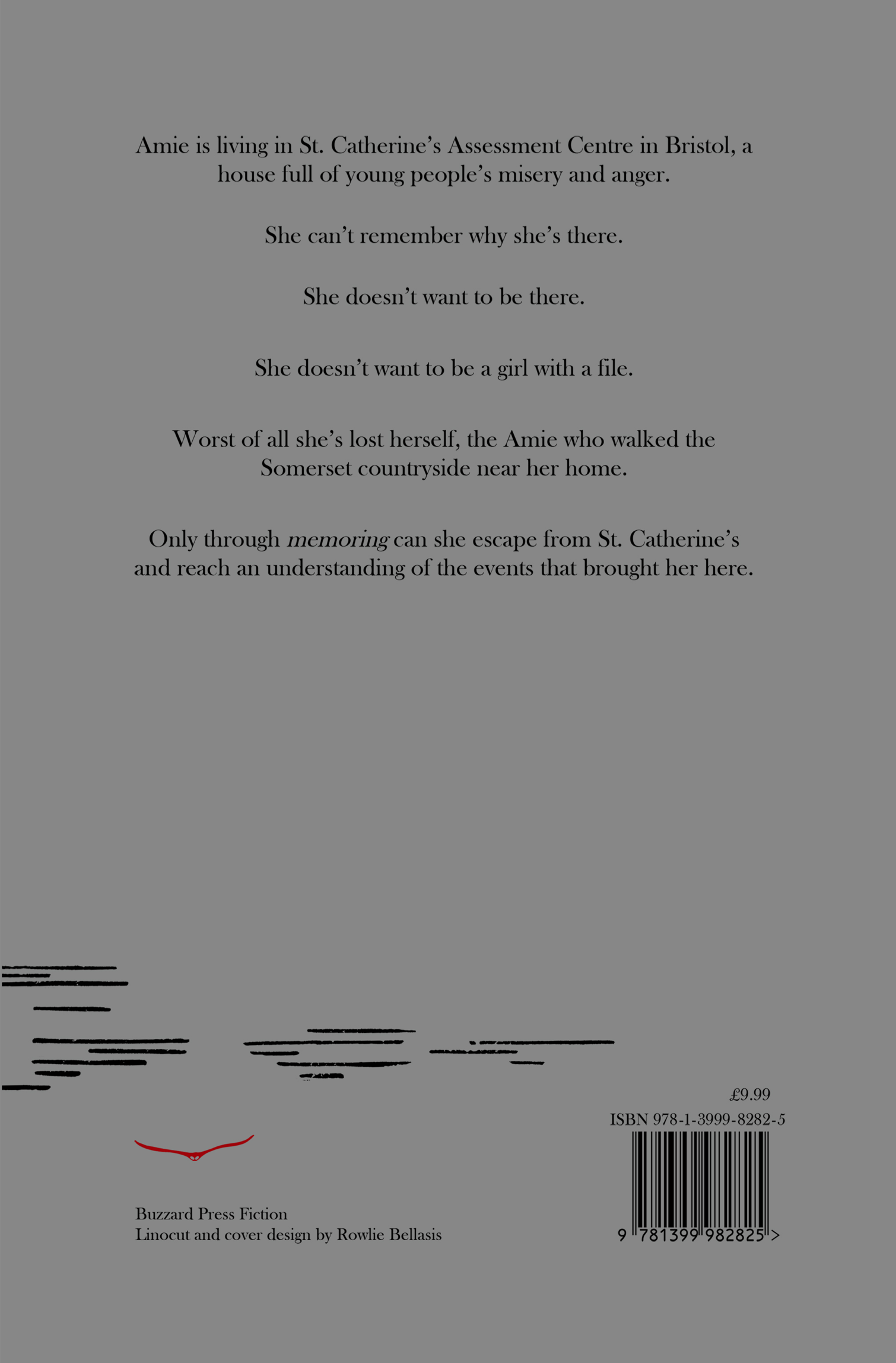
Living in an Assessment Centre for Young People in Bristol Amie has lost her sense of identity.
Unable to remember why she’s been brought here she escapes the unbearable present by ‘memoring’ back to life in Somerset, her walks in the countryside, her dysfunctional family.
This is a novel that explores the long arm of early childhood trauma and how where you live, the place you call home, can be deeply embedded in your sense of self.
I was on a train travelling from Devon up to London and as always, looking out of the window wondering how it would be to live in the places we passed, to know them intimately, every tree, hedgerow, cluster of houses. Then, what if one was removed against one’s will from the place that had been home for all your life? It happens to so many thousands of people, all over the world, people fleeing from war, famine, and from climate crisis. I wanted to inhabit one such story, a story of removal. My main character would have limited knowledge of the wider world and be, in some way, emotionally frail.
I wasn’t putting myself in this situation, but creating someone with their own back story and their own voice. This character very quickly became Amie, a teenager used to suppressing her early trauma, used to being labelled, but also someone with potential for recovery and growth. The reader follows Amie in her day to day life in St. Catherine’s Assessment Centre learning to become ‘normal’ and sharing her memories in her search for the events that led to her placement.
Extract from Chapter One
One day, one day soon, I will be walking in fields and woods, up hills, purple with heather, yellow with gorse, down to wooded valleys under the shade of oak and beech, across the watery levels, and out to where the marshes snake down to the sea and you can get lost in paths between reeds and mud searching out the brightness of the shoreline. Amie was girl who walked, walking was her life. One day I will have a life again and be Amie.
St. Catherine’s Assessment Centre, Redlands, Bristol. A place of misery and anger. They call it a Place of Safety, but what good is safety if it makes you unhappy? Martin Massey, the man who comes to talk the one to one talking sessions says fear has always been my companion, and I think he is right. Fear is the choking of smoke and the burning of flame. It is the gasping for air and the terror of pain. Fear is the friend of asthmatic breathing and the drowning without water. It sets the fishes swimming this way and that in my tummy, this way and that, swishing about, making me feel sick. If I feel the fear rising I must concentrate on the here and now and sometimes the counting helps, the counting of moments, of the breathing in and the breathing out and the counting of steps, one, two, three, four. Fear is acute anxiety or P.T.S.D. I am not a girl with Learning Difficulties after all.
If I sit very still in the aloneness of my bedroom, sitting on the stripy bedcover that must have the stripes going up and down, not sideways across, very still with my eyes closed, then I can see the mist rolling across the fields, a softness rolling this way and that. I can smell its dampness and down at my feet the grass has beads of moisture, little jewel drops. Memoring
Memoring is the prequel to Amie’s Rest.
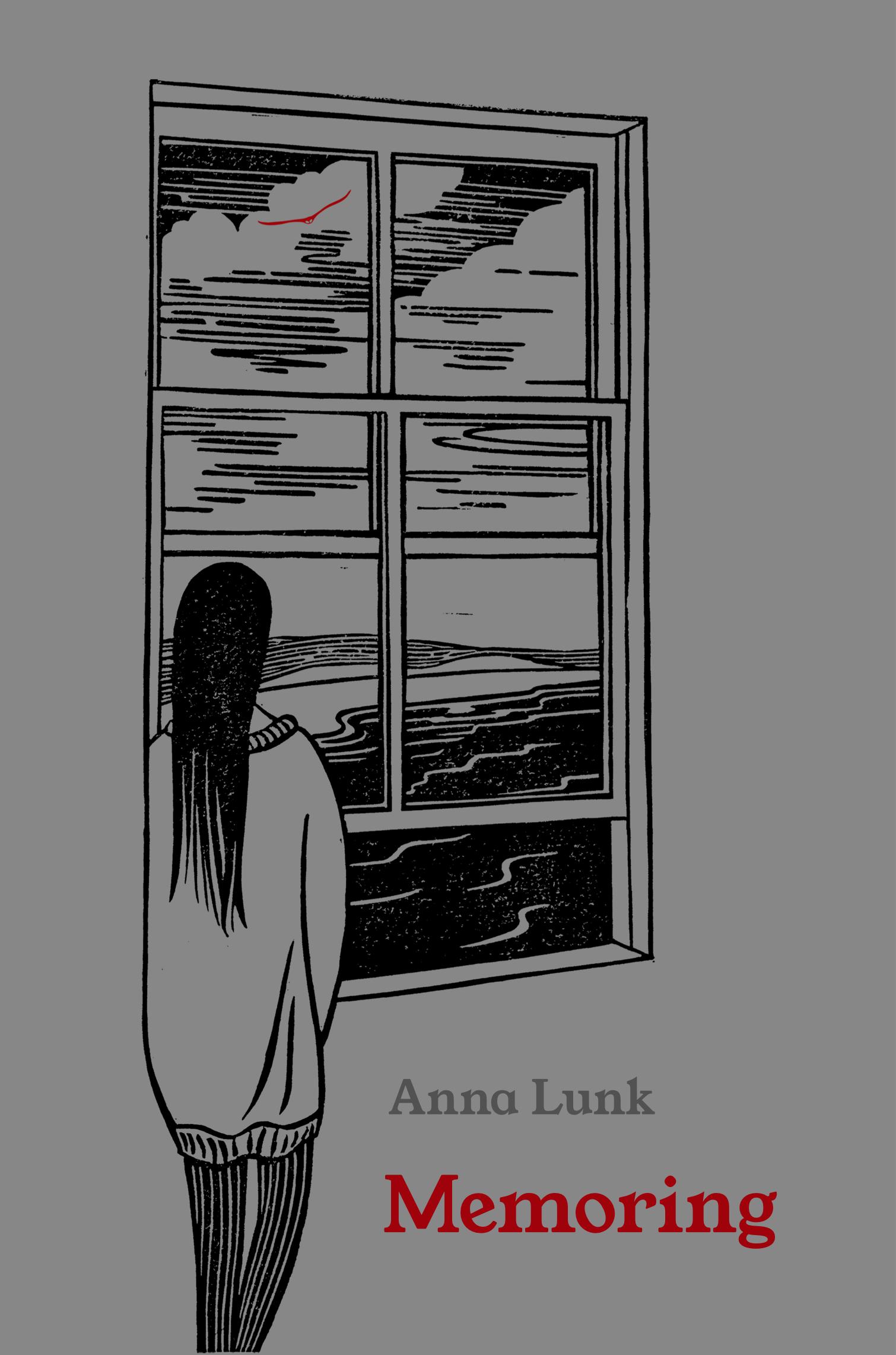
Cover design and illustration are by Rowlie Bellasis who given the briefest of outlines of the novel came up with such an appropriate image, combining the confines of Amie’s Bristol bedroom with her memories of Somerset. His linocuts can be seen on www.smallplant.bandcamp.co.uk
£9.99
Available from the East Gate Bookshop, Totnes.
Tel: 01803 865317
Click here to buy online:
www.eastgatebookshop.co.uk